For a light fall yard cleanup, bagging leaves and setting them out for curbside collection is usually enough. When your project involves fallen branches, overgrown shrubs, old landscaping materials, or a full property cleanup, a roll-off dumpster is often the faster and simpler choice. It’s easy to underestimate how much debris a fall cleanup produces, and that’s when bags start piling up at the curb. This guide explains how to judge the size of your cleanup, when bagging stops making sense, and how to choose the right dumpster for the job in DC, Maryland, and Virginia.
Why Fall Cleanup Creates More Debris Than You Expect
Fall cleanup rarely stops at raking. Once homeowners get started, the list tends to grow:
- Leaves from multiple trees that drop over several weeks
- Branches and limbs brought down by fall storms and wind
- Spent annuals, garden beds, and vegetable plants
- Overgrown shrubs and hedges cut back before winter
- Old mulch, landscape edging, and broken planters
- Worn patio furniture, grills, and outdoor items that didn’t survive the season
Leaves are lightweight but bulky, and branches don’t fit neatly into bags or bins. What starts as a weekend raking project can quickly become dozens of bags and a pile of brush with nowhere to go.
When Bagging Leaves Is Enough
Bagging works well for smaller properties and routine maintenance. It’s usually the right choice when:
- You have only a few trees and a manageable lawn
- Debris is mostly leaves and grass clippings
- There are no large branches or bulky items involved
- Your local leaf or yard waste collection fits your schedule
Many local governments in DC, Maryland, and Virginia run seasonal leaf collection programs, but schedules, bag requirements, and accepted materials vary by county and city. Check your local program before you start so your bags don’t end up sitting at the curb longer than planned.
When a Roll-Off Dumpster Makes More Sense
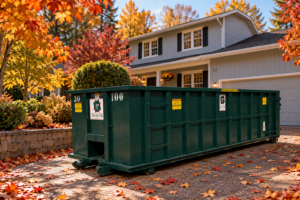
A roll-off dumpster rental is the better option when your cleanup goes beyond leaves. Consider a dumpster if:
- You’re clearing storm debris: Branches and limbs are awkward to bag and often too large for curbside pickup
- You’re tackling a full property cleanup: Removing old landscaping, overgrown beds, and outdoor clutter in one project
- You’re combining yard and home projects: Many homeowners pair fall yard work with a garage or shed cleanout
- You want everything gone at once: A dumpster lets you load as you work instead of waiting on collection days
- You’re managing a larger property: HOAs, rental properties, and larger lots generate more debris than curbside service can handle
If your cleanup includes the garage or basement too, our guide to post-summer decluttering can help you plan both projects together.
Choosing the Right Dumpster Size for Fall Cleanup
kmG Hauling offers four roll-off sizes. Here’s how they typically fit fall projects:
- 10 Yard Dumpster: Best for small yard cleanups, a few trees’ worth of branches, or clearing out garden beds
- 15 Yard Dumpster: A good fit for medium cleanups that combine yard debris with shed or garage items
- 20 Yard Dumpster: Works well for larger properties, storm cleanup, or removing old landscaping
- 30 Yard Dumpster: Suited for major property cleanups, multiple lots, or commercial and HOA grounds projects
If you’re unsure, it’s usually better to size up slightly. Leaves and brush take up more space than most people expect.
What Can Go in a Dumpster During Fall Cleanup
Rules for yard waste vary by jurisdiction, and some materials need special handling. Before loading your dumpster, review what can and can’t go in an open top dumpster in DC, MD, and VA. A few general reminders:
- Never put paint, fuel, oil, pesticides, or fertilizer containers in a dumpster
- Propane tanks from grills and patio heaters require special disposal
- Soil, rock, and concrete are heavy and may need to be handled separately
- Ask about yard waste requirements when you book so your load is handled correctly
Tips for a Faster Fall Yard Cleanup
- Start after most leaves have dropped. Waiting until late in the season can save you from raking the same area multiple times.
- Cut branches down to size. Breaking limbs into shorter pieces helps them lie flat and saves space.
- Load bulky items first. Place larger debris on the bottom and fill gaps with smaller material.
- Keep the dumpster level. Don’t load debris above the top edge of the container.
- Plan around the weather. Fall rain makes leaves heavier and harder to move, so dry days make cleanup easier.
- Consider composting. Clean leaves and grass clippings are valuable organic material. Learn about our composting services offered through our trusted partners.
Common Mistakes Homeowners Make
- Underestimating how many bags fall leaves will fill
- Leaving bags at the curb outside their local collection window
- Trying to bag large branches instead of using a dumpster
- Mixing hazardous materials like fuel or chemicals in with yard debris
- Choosing a dumpster that’s too small and needing a second haul
Make Fall Cleanup Easier With kmG Hauling
Whether you need a quick roll-off for storm debris or a larger container for a full property cleanup, kmG Hauling makes fall cleanup simple across DC, Maryland, and Virginia. Our residential services cover everything from bulk pickup to yard debris removal, and our roll-off dumpsters come in sizes to fit most projects. Have questions before you book? Visit our FAQ or reach out to our team.
FAQ
Do I need a dumpster for fall yard cleanup?
Not always. Bagging is usually enough for leaves and light debris. A roll-off dumpster makes sense when you’re clearing branches, removing old landscaping, or combining yard work with other cleanout projects.
What size dumpster do I need for yard waste?
A 10 yard dumpster works for most small yard cleanups. Larger properties, storm cleanup, or full landscaping removal may need a 15, 20, or 30 yard dumpster.
Can I put leaves and branches in a roll-off dumpster?
Yes, in most cases. Leaves, branches, brush, and grass are commonly accepted in open-top roll-offs, though some counties prefer separate yard waste disposal for large volumes. Let our team know you’re disposing of yard debris when you book so it’s handled properly.
When is the best time to do fall yard cleanup?
Late fall, after most leaves have dropped, is usually the most efficient time. It lets you clear everything in one pass instead of repeating the work as more leaves fall.
Can I combine yard cleanup with a garage or shed cleanout?
Yes. Many homeowners use one dumpster for both projects, which saves time and avoids scheduling multiple pickups.
What items should not go in a dumpster during fall cleanup?
Paint, fuel, oil, pesticides, propane tanks, and other hazardous materials should never go in a dumpster. These items require special disposal. Tires, batteries, electronics, and appliances like refrigerators also need special handling.
Ready to tackle your fall yard cleanup? Contact kmG Hauling or call 703-961-1100 to reserve the right roll-off dumpster for your project.